The face
The saw was already halfway through the sinner when Alexander reached the plaza.
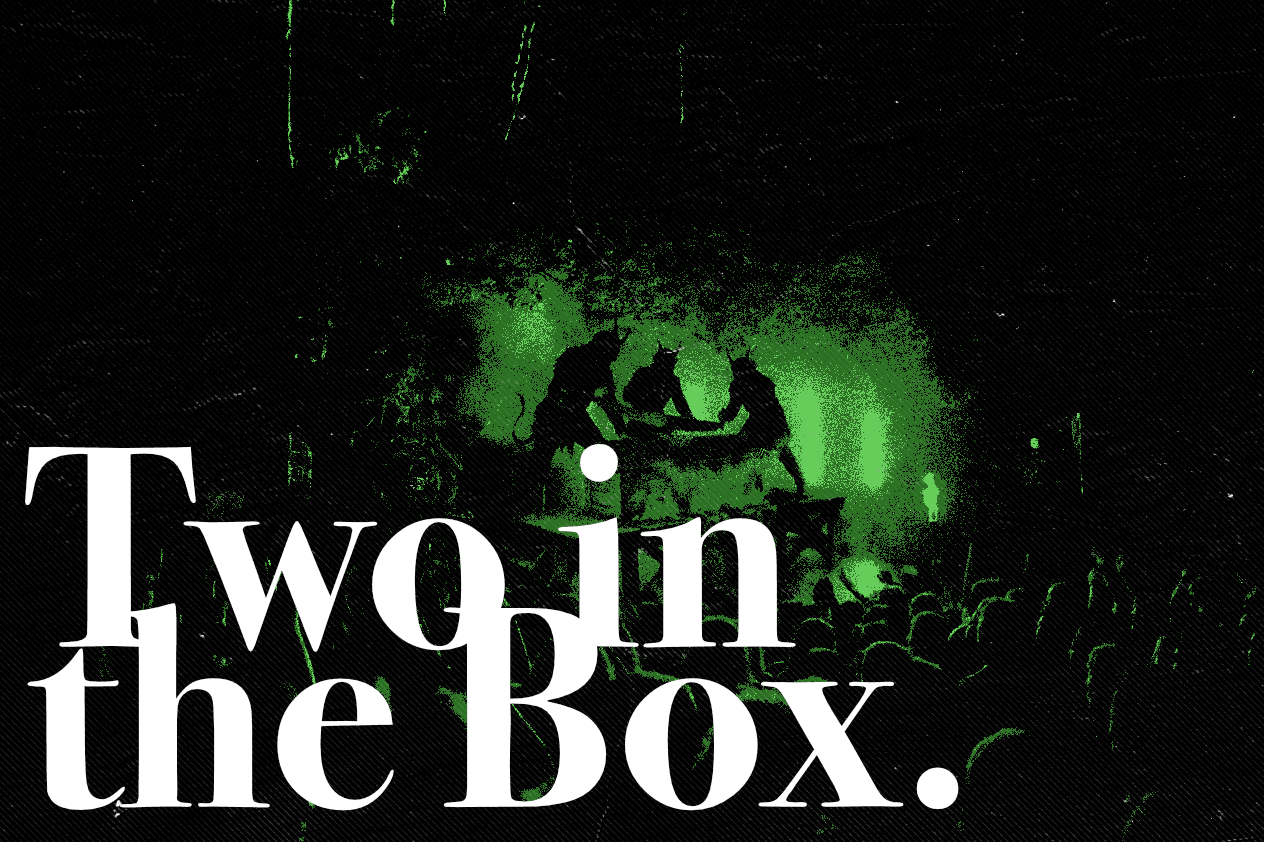
Three devils worked it. They wore charcoal masks with needle-thin horns, the kind the Assassins' guild had lent to the Hell-Mouth play every festival since before anyone could remember why. Beneath the trestle, a fire of painted cloth rippled in the updraft of real torches. On the trestle lay a long box of red-lacquered wood. A head protruded from one end and a pair of feet from the other.
The head wore a mask of an old man with a trimmed white beard. The robe draped over the box was forest green, faded at the hem the way only years of washing in lye could fade it.
Alexander stopped walking.
Around him the crowd had gone quiet in the particular way of people who already know how something ends and want to watch it anyway. Ribbons from four towers hung slack over the plaza: purple, blue, charcoal, and a green that tonight looked more like an accusation than a colour.
"Poisoner," someone muttered near him. Then, louder, someone else.
The devils did not hurry. That was the craft of it. Push stroke, pull stroke, the teeth biting into the lacquer. The masked head rolled from side to side and let out a long, theatrical groan. At the foot end, the feet curled.
Alexander knew the walk of the devil at the far handle before he knew anything else about him. It was a small hitch, favouring the left side, from a fall off the wall of Georgian's yard when they were both eight and Francis had been trying to reach a bird's nest that wasn't there. Francis had told everyone he'd been pushed. He hadn't been. Alexander had never corrected him, not even to Georgian, who had known anyway and said nothing either.
Near the end the devils paused, with the saw buried and their masked faces turned outward to the crowd, as if they had only just realised what they were doing. Nobody in the plaza breathed.
Then the blade came through, and the devils pulled the two halves of the box apart.
No blood came out. Herbs did. Rosemary, rue, lavender, and feverfew poured from the open ends in green drifts onto the painted fire. Someone backstage had soaked the cloth flames with oil, and the herbs caught all at once. The fire leapt higher than anyone had meant it to, and the smoke came up sweet and medicinal across the whole plaza. It was the smell of the Apothecary tower, of Henry's sleeves, of every fever Alexander had ever nursed.
The crowd roared.
Under the roar, closer to the stage, a man screamed.
He had been standing at the front, close enough to touch the trestle, and a sheet of burning cloth had lifted on the updraft and come down across his forearm. He staggered back clutching it, his sleeve smouldering. The people around him stepped away to keep the sparks off their festival clothes. Then they turned back to the stage, where the devils were taking their bow.
Alexander was already moving. He shouldered through the crowd, caught the man by the elbow, and lowered him onto the cobbles at the foot of the grandstand. The sleeve came away with a smell of scorched wool. Beneath it, the skin was red and already blistering in a band as wide as a hand.
"Don't touch it," Alexander said. "Look at me, not the arm."
He had his satchel open before the man could answer. He poured cool water from his flask over the burn, slowly and for longer than the man wanted, then smoothed salve over it with two fingers. It was marigold and honey, the same pot he'd carried since his first year as an apprentice. He laid clean linen over it loosely so it wouldn't stick.
The man watched his hands, then his face, and the scarred side of it. He didn't look away. Alexander liked him for that.
"I can't pay you," the man said. He started to pull his arm back. "I've nothing, sir. I shouldn't have let you—"
"There's no fee."
"But you're guild. Green. I know what a guild apothecary costs—"
"There's no fee," Alexander said again, and tied off the linen. "Keep it dry. Change the dressing tomorrow and the day after. If it smells wrong or goes hot, come to the Apothecary tower and ask for me. Not the front desk. Me."
The man stared at him. Above them, the crowd was chanting at the empty green robe.
"They're cheering your master being sawn in half," the man said slowly, "and you're down here with me."
"He'd be down here too," said Alexander, "if they'd let him out."
The Feet
The stage cart stood behind the Astronomers' grandstand, where the purple banners threw everything into shadow. Two of the devils had already gone. The players were packing the box. Up close it was cheap work: pine under the lacquer, hinges that wouldn't survive another festival.
An old man sat on an upturned crate, peeling spirit gum from his chin. Without the mask he looked nothing like Henry. He looked like a man who had spent his life being other people for an evening and was tired of it.
"You were the head," Alexander said.
The player squinted up at him, at the scar tissue down the left side of his face, and decided not to remark on it. "Thirty years I've been the head. Saints, kings, one very ungrateful dragon. Good part. You get the face."
"Who was the feet?"
"Hm?"
"The box is too short for one man." Alexander crouched beside it. The head end held a padded shelf where a body could curl, knees to chest. The foot end held a second, smaller compartment with two holes cut low for stockinged feet to push through. "There are two of you in it. You're folded up in one end with your head out. Someone else is folded in the other with their feet out. The saw goes through the empty middle."
The player smiled despite himself. "That's the trick, yes. You'd be surprised how many people never think to count."
"Who was the feet tonight?"
"No idea." He shrugged. "Not ours. Our lad's down with a flux. A replacement turned up an hour before with the right fee and the right stockings. Hood up the whole time, didn't talk. Didn't stay for his pay, either, which I'll admit I found odd." He peeled away the last of the beard. "Folded himself into that end without being shown how, mind. Like he'd done it a hundred times. Like he'd…"
He stopped. The beard hung from his fingers. He looked at the foot end of the box for a long moment, and when he looked back up, something had closed in his face.
"What did he look like?"
"Didn't see him," the old man said, too quickly. He stood and began folding the green robe with great care, his back to Alexander. "Son, nobody looks at the feet."
The Saw
Francis was waiting at the mouth of the alley that led down towards the underground, his mask pushed up onto his forehead so the charcoal horns stood above his own dark hair. He held the saw loosely in one hand, teeth down.
"You're a long way from your herbs," he said.
"Who commissioned the pageant?"
"The festival commissions the pageant. It always has." Francis turned the saw a little, so that the torchlight ran along the blade. "We provide the devils. That's all. Tradition."
"And the green robe? The mask?"
"Players choose their own costumes." His face gave nothing away. It had been giving nothing away since they were twelve. "People were going to say it anyway, Alexander. Better they say it at a play than in the street."
"Henry made no mistake."
"Henry stood up in the Council chamber and said the tonic came from his tower, badly made." Francis tilted his head. "Is that the part you keep forgetting, or the part you can't forgive him for?"
Alexander said nothing. Somewhere behind them, the crowd was singing.
Francis stepped past him towards the plaza. At the edge of the torchlight he stopped, without turning around.
"You always did watch the wrong end of things," he said, and went.
The Empty Middle
The roof garden of the Apothecary tower was dark except for the lamp in the potting shed. Henry was there, as Alexander had known he would be, kneeling at the low bed in the far corner, the one Alexander had never seen anybody else allowed to tend. It was all old varieties: clove pinks, sweet cicely, a straggling grey sage. Henry had grown them from cuttings, years ago. Alexander knew where those cuttings had come from, because he had grown up beside the plants they were taken from, under Georgian's kitchen window. He had never asked Henry about them. Some questions you didn't ask a man.
Henry did not look up.
"I could smell it from here," he said. "Rue on an open flame. Somebody went to a great deal of trouble."
"They wanted the whole city to carry it home."
"Yes." Henry pressed soil around the roots of the sage with his thumbs. "Well. It's a good smell. There are worse things to be remembered by."
"A man was burned. At the front, when the fire went up."
Henry's hands paused. "Badly?"
"Forearm. Blistered, not broken through. I dressed it."
"Marigold and honey?"
"Marigold and honey."
"Good," said Henry, and went back to his soil.
Alexander stood among the beds and watched him work, and he thought about the night of the tonic, as he had every night since.
It had been late, the tower empty, one lamp burning in the compounding room. A royal commission, the prince's evening draught, and Henry had given it to him. Not to a senior, not to himself. Your hands are steady, Henry had said, and it is time someone noticed. He had stood at Alexander's shoulder through every step. When Alexander's fingers shook on the fine scale, Henry had laid two fingers on the beam to still it, without a word, and taken them away again. They had read each measure aloud against the recipe, twice. Every quantity was right. Every ingredient was drawn from the tower's own stock, sealed and labelled. When it was done, Henry had turned the ledger round and slid it across the bench, and Alexander had signed it. His first royal commission. He had walked home through the dark feeling ten feet tall.
Four days later, the prince was dead. Two days after that, Alexander had opened the ledger and found his own name gone. Henry's was there instead, neat and certain, as if it always had been.
"I watched them saw you in half tonight," Alexander said. "Everyone was looking at your face, at the head end. That's the end with the mask on it, so that's where everyone looks."
"Alexander."
"I was there, Henry. I made it. You stood at my shoulder and we checked every measure, twice. The recipe was right. There was no mistake." His voice was low. Sound carried strangely between the towers at night.
Henry's hands had stopped moving in the soil. For a long time the Master Apothecary said nothing. Below them the festival lanterns burned across the plaza, and beyond it the needle spire of the Assassins' tower stood black against the stars, its tip lost in the dark.
"Go to bed, Alexander," Henry said at last, very quietly. "And leave it be."
He hadn't denied a word of it.
Alexander went down the stairs with the smoke still in his clothes, and the thought went with him, as plain and patient as a saw: there are always two in the box.